Seeking Fintech Solutions to Revitalize Agriculture
in Pakistan
16 January, 2024 | Articles
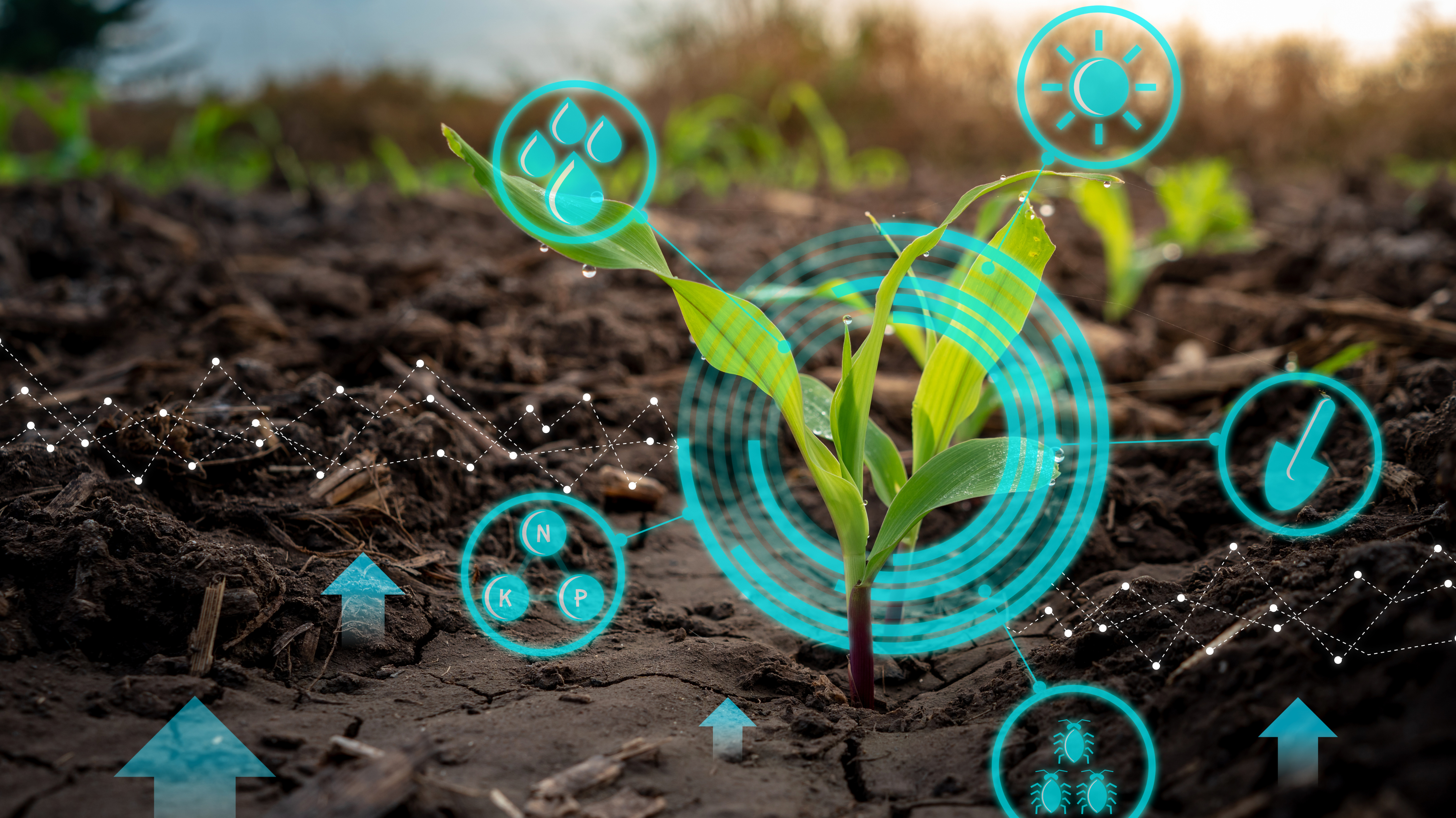
Agri-tech is reshaping the agricultural landscape, offering innovative solutions to address global food security challenges, improve efficiency, and promote sustainability. Embracing these technologies is crucial for ensuring a resilient and productive future for the agriculture sector. The paper focuses on a transformative approach in shaping the future of Pakistan agricultural industry. First by bringing light to the ongoing challenges and then to give solutions coming from expert views and evidence-based practices.

Figure 1. Freelancer Revenue Growth 2020
To elevate per-acre yield, this policy paper suggests leveraging technology through video-based localized advisories and targeted subsidies for adopting new cropping patterns. Additionally, initiatives like providing free satellite- based cultivation data and enhancing weather forecasting through collaborative efforts aim to empower farmers with timely and accurate information. Mechanization solutions focus on incentivizing the establishment of Farm Service Centers, forming partnerships with international manufacturers, and fostering high-value agriculture value chains. The introduction of friendly policies for agri-drones and access to satellite imagery data further enhances technological integration. To ensure input availability and proper usage, the proposal advocates for improved forecasting systems. Lastly, strategies for access to affordable credit and comprehensive agricultural insurance schemes underscore the holistic approach to fortifying Pakistan’s agricultural landscape.
The recommendations for addressing water scarcity and promoting water conservation in Pakistan advocate a multifaceted approach. To combat groundwater exploitation, the paper suggests the implementation of area-based water usage policies and the promotion of less water-intensive crops. Additionally, the development of alternative water sources, such as new reservoirs, is recommended. To manage water taxation responsibly, the paper suggests no water tax on tube wells and the application of a water tax on canal water. The utilization of polymer seepage treatment in large capacity canals and the implementation of an AI-driven irrigation scheduling system aim to minimize water leakage and optimize water usage. Financial institutions are urged to play a role by providing subsidies on efficient irrigation technologies and monitoring water usage. In conclusion, the recommendations underscore the need for a comprehensive water conservation policy in Pakistan to ensure sustainable
water management and contribute to socio-economic development.
The proposed strategies aim to fortify the agricultural sector in Pakistan by addressing various challenges in the farm-to- market supply chain. Recommendations include measures to strengthen farmers’ collective bargaining power through the formation of associations, investments in storage and transportation infrastructure to minimize post-harvest losses, and the promotion of fair market competition by addressing monopolies. Gender-inclusive policies and reforms in cooperative laws seek to empower female farmers and create a conducive environment for cooperative development. Additionally, interventions in market price mechanisms, technology utilization for yield prediction, and promoting sustainable farming practices underscore a holistic approach. These solutions, once implemented, are anticipated to enhance efficiency, profitability, and sustainability in Pakistan’s agricultural sector, fostering better value-added supply chains.
This paper also advocates for Pakistan’s livestock and dairy sector focuses on incentivizing technology adoption through subsidies and public-private collaborations, allocating funds for critical research and fostering collaboration for practical innovation. It emphasizes streamlined credit access, offering dedicated financial mechanisms, and suggests enhancing extension services through digital outreach and workshops to keep farmers informed. The proposal also advocates for substantial investments in cold storage and processing facilities, encouraging public-private partnerships to ensure efficient infrastructure development and reduced post- harvest losses, collectively fostering a resilient and technologically advanced agricultural ecosystem.
The policy recommendations outlined in the paper for enhancing the livestock and dairy sector in Pakistan center on promoting technology adoption, facilitating public-private partnerships, and investing in research and development. Financial incentives and collaborative innovation are proposed to encourage farmers to adopt modern technologies. Streamlining access to credit through dedicated financial mechanisms aims to support farmers in implementing innovative practices. The reinforcement of extension services, incorporating digital outreach for knowledge dissemination, is crucial for widespread adoption of innovative techniques. Infrastructure improvement,
including cold storage and processing facilities, is advocated to reduce post-harvest losses. Public-private partnerships in infrastructure development further ensure the efficient utilization of resources. These multifaceted strategies collectively aim to uplift the livestock and dairy industry, fostering innovation, sustainability, and economic viability in Pakistan’s agricultural landscape.
This policy paper proposes a holistic approach by embracing fintech. Pakistan can create an efficient, sustainable, and economically vibrant agricultural future, positioning itself as a leader in modern agriculture if it adheres to the recommendation mentioned in this paper. This convergence addresses immediate challenges, fosters resilience against food insecurity, and promises a prosperous agricultural ecosystem for the nation.
References
Cumming, D., Johan, S., & Reardon, R. (2023). Global fintech trends and their impact on international business: a review. Multinational Business Review, 31(3), 413-436.
Pakistan Bureau of Statistics (2023), Agriculture Statistics.
Pakistan Economic Survey (2022) and Finance Division Government of Pakistan
Abdul-Ghani, M., Ali, G., Shahzadi, U., & Raza, S. H. (2020). Technological Innovations in Livestock Farming and their Impact on Rural Livelihoods in Pakistan.
Ahmed, S., Raza, S. H., & Ali, G. (2021). Adoption of Modern Technologies in Livestock Farming: A Case Study of Punjab, Pakistan.
Malik, R. N., & Hanjra, M. A. (2020). Research and Development in Livestock Sector: A Comparative Analysis of Pakistan and China.
Qureshi, A. S., Ali, G., & Shahzadi, U. (2022). Extension Services and Innovations Adoption in Livestock Farming: Evidence from Rural Pakistan.
Khan, A., Ali, G., Shahzadi, U., & Raza, S. H. (2019). Breeding Practices and Milk Yield in Pakistani Dairy Farms
Puschmann, T. (2017). Fintech. Business & Information Systems Engineering, 59 (1), 69– 76.
Schueffel, P. (2016). Taming the beast: A scientific definition of fintech. Journal of Innovation Management, 4(4), 32-54.
Khan, N., Ray, R. L., Sargani, G. R., Ihtisham, M., Khayyam, M., & Ismail, S. (2021). Current progress and future prospects of agriculture technology: Gateway to sustainable agriculture. Sustainability, 13(9), 4883.
12. Muhie, S. H. (2022). Novel approaches and practices to sustainable agriculture. Journal of Agriculture and Food Research, 100446.
13. Chaudhary, S., & Suri, P. K. (2022). Agri-tech: Experiential learning from the Agri-tech growth leaders. Technology Analysis & Strategic Management, 1-14.
14. Eashwar, S., & Chawla, P. (2021, June). Evolution of agritech business 4.0–architecture and future research directions. In IOP Conference Series: Earth and Environmental Science(Vol. 775, No. 1, p. 012011). IOP Publishing.
15. Ganeshkumar, C., David, A., & Jebasingh, D. R. (2022). Digital transformation: Artificial intelligence-based product benefits and problems of agritech industry. In Agri-Food 4.0 (Vol. 27, pp. 141-163). Emerald Publishing Limited.
16. McIntosh, C., & Mansini, C. S. (2018). The use of financial technology in the agriculture sector (No. 872). ADBI Working Paper.
17. Utami, C. W., Indrianto, A. T. L., & Pratama, I. (2019). Agricultural Technology Adoption in Indonesia: The Role of the Agriculture Extension Service, the Rural Financing and the Institutional Context of the Lender.
18. Shah, A., & Zaidi, M. (2023). Transforming Pakistan’s Agriculture Sector through Fintech: Opportunities for Financial Inclusion and Sustainable Development. Global Sustainability Research, 2(3), 60-71.
19. Ullah, A., Mahmood, N., Zeb, A., & Kächele, H. (2020). Factors determining farmers’ access to and sources of credit: evidence from the rain- fed zone of Pakistan. Agriculture, 10(12), 586.
Stay Up-To-Date!